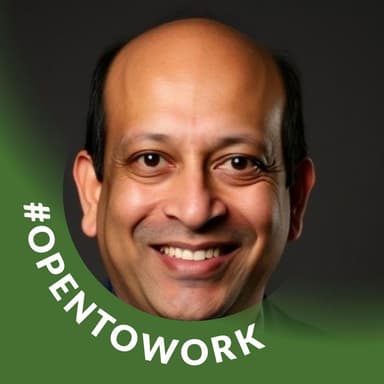
Ravi Bagal
Chief Revenue Officer | SVP Sales & Marketing | 2025 Top Retail Expert | Former AWS Worldwide Retail/CPG Strategy Leader | Retail Transformation Authority | Available for CRO/CMO/Fractional Roles
Revenue executive who transforms retail industry expertise into measurable business growth. Named 2025 Top Retail Expert by Rethink Retail. Led worldwide strategy for AWS retail/CPG division for 9 years, architecting cloud-based solutions for Fortune 500 retailers. Built C-suite relationships, established thought leadership through NRF speaking and Wharton guest lectures. Ready for CRO/CMO/SVP roles or fractional engagements driving revenue impact.
Contact Information
Skills & Expertise
Ravi transforms retail industry expertise into revenue growth and market leadership. With 20+ years strategic leadership including 9 years leading AWS worldwide retail/CPG strategy and 8 years as Verizon VP & Global Managing Director, Ravi specializes in revenue acceleration, unified commerce transformation, and executive relationship management that drives measurable business impact.
What makes Ravi different:
Most revenue executives understand either retail OR technology. Ravi bridges both—bringing deep retail industry credibility combined with proven cloud transformation expertise. His unique positioning opens C-suite doors immediately, translates complex technology into business outcomes, and builds strategic partnerships that generate sustainable revenue growth.
Track Record:
Industry Authority & Thought Leadership:
- Named 2025 Top Retail Expert by Rethink Retail
- Frequent speaker at National Retail Federation Annual Conference
- Guest lecturer for Wharton School of Business Global Consulting Practicum
- Recognized authority on unified commerce and retail digital transformation
- 20+ years retail/CPG industry experience across technology and operations
Revenue & Business Development Leadership:
- Led worldwide strategy for AWS retail/CPG vertical (9 years)
- Built and maintained C-suite relationships with Fortune 500 retailers
- Drove strategic business development initiatives across global retail accounts
- Architected enterprise cloud adoption strategies generating multi-million dollar revenue
- Positioned AWS as strategic cloud partner for retail industry transformation
Executive Leadership & P&L Ownership:
- VP & Global Managing Director at Verizon (8 years)
- Led global P&L for retail & distribution vertical
- Built and led global business development organizations
- Architected major enterprise deals with Fortune 500 retailers
- Maintained C-suite relationships across top-tier retail accounts
Unified Commerce & Digital Transformation:
- Pioneer in unified commerce strategies leveraging cloud infrastructure
- Architected omnichannel retail transformation for Fortune 500 companies
- Drove adoption of AI/ML for retail personalization and inventory optimization
- Led retail technology modernization and digital-first business models
- Established thought leadership in unified commerce transformation
Target Roles: Chief Revenue Officer | Chief Marketing Officer | SVP Sales & Marketing | VP Business Development | Fractional CRO | Advisory Board Member
Ideal Companies: Retail/CPG companies ($50M-$500M revenue), Retail technology platforms (SaaS, unified commerce), Growth-stage companies seeking enterprise sales expertise, Private equity firms with retail portfolio companies
Degrees:
- JD, Syracuse University College of Law
- SOAS University of London
Certifications:
- Accelerated Management Program, Yale School of Management
- Innovation and Entrepreneurship Certificate, Stanford University
Ravi doesn't just understand retail—he shapes how the industry transforms through cloud innovation and unified commerce strategies.
Industry Recognition & Thought Leadership
Named 2025 Top Retail Expert by Rethink Retail, recognizing demonstrated thought leadership in retail digital transformation and unified commerce strategy. This recognition places Ravi among the most influential voices shaping retail's technology-driven future.
Frequent speaker at National Retail Federation Annual Conference, the retail industry's premier event drawing 40,000+ attendees including retail CEOs, CMOs, and CROs. Ravi's NRF presentations position him as strategic authority on unified commerce transformation, cloud adoption strategies, and retail technology modernization.
Guest lecturer for Wharton School of Business Global Consulting Practicum, teaching next-generation business leaders about retail strategy and digital transformation. Academic credibility at Wharton—consistently ranked top 3 business school globally—demonstrates recognized expertise beyond commercial technology sales.
20+ Years Retail Industry Experience
Ravi's retail expertise spans the full evolution of modern commerce: from traditional brick-and-mortar operations through e-commerce emergence to today's unified commerce environments. This longitudinal perspective enables strategic guidance grounded in understanding what actually works versus what sounds innovative but fails in execution.
Unlike technology vendors who learn retail through sales cycles, Ravi built expertise through operational roles, strategic leadership positions, and direct P&L accountability across retail and consumer product companies. He understands retail from inside the business, not just from the vendor perspective.
Unified Commerce Authority
Recognized authority on unified commerce strategy—the integration of online, mobile, in-store, and emerging channels into seamless customer experiences supported by integrated backend systems. While competitors discuss omnichannel tactics, Ravi architects unified commerce transformations addressing the organizational, technical, and operational complexity required for true channel integration.
Unified commerce expertise extends beyond technology implementation to encompass organizational change management, process redesign, talent development, and strategic repositioning required for traditional retailers competing against digital-native competitors.
C-Suite Network & Executive Access
20+ years building executive relationships across Fortune 500 retail and consumer product companies creates immediate access to decision-makers. Ravi doesn't need introductions to retail CXOs—they already know him from National Retail Federation events, industry advisory boards, and strategic consulting engagements.
This network provides immediate credibility when joining new organizations. Ravi's industry authority opens doors for enterprise sales conversations, strategic partnerships, and market positioning initiatives that would take typical executives months or years to establish.
Market Influence & Strategic Positioning
Through speaking engagements, thought leadership publications, and industry participation, Ravi influences how retail executives think about technology adoption, unified commerce strategies, and digital transformation priorities. This influence creates strategic value for organizations Ravi joins—immediate association with recognized retail transformation authority.
Impact: 2025 Top Retail Expert recognition, NRF Annual Conference speaker, Wharton guest lecturer, 20+ years retail industry experience, unified commerce authority, Fortune 500 C-suite network providing immediate executive access
What makes this different: Most revenue executives build industry knowledge through sales experience. Ravi built authority through operational leadership, strategic roles, thought leadership, and academic recognition—positioning him as industry insider, not vendor outsider.
Ravi doesn't sell technology features—he architects revenue-generating strategies leveraging cloud innovation to solve real retail business challenges.
Amazon Web Services | Head, Worldwide Strategy and Business Development - Retail/CPG (2017-Present, 9 years)
Led worldwide strategy and business development for AWS retail and consumer product companies, architecting cloud transformation initiatives for Fortune 500 retailers and driving unified commerce innovation across global markets.
What Ravi Built at AWS:
Strategic Leadership & Market Positioning:
Led worldwide strategy for AWS retail/CPG vertical, providing strategic vision for how global retailers leverage cloud technology to compete in unified commerce environments. This wasn't sales execution—it was market-level strategy defining AWS positioning, go-to-market approaches, and solution development priorities for entire retail industry vertical.
Architected enterprise-wide cloud adoption strategies for Fortune 500 retailers and consumer product companies, translating complex AWS capabilities into measurable retail business outcomes. Worked directly with retail CEOs, CMOs, and CROs understanding strategic priorities and designing cloud strategies addressing competitive challenges.
Positioned AWS as the strategic cloud partner for retail industry transformation through thought leadership, strategic partnerships with retail technology ecosystem, and participation in National Retail Federation and key industry forums. Market positioning work enabled AWS retail business growth and established category leadership.
Business Development & Revenue Growth:
Drove strategic business development initiatives across worldwide retail/CPG accounts, generating multi-million dollar AWS revenue through enterprise cloud adoption. Built and maintained C-suite relationships with global retail and consumer product company executives, establishing trust required for strategic technology partnerships.
Developed go-to-market strategies for AWS retail solutions, translating cloud capabilities into measurable retail business outcomes. Led cross-functional teams across AWS product, marketing, and sales organizations to deliver integrated retail solutions addressing supply chain optimization, customer experience enhancement, and operational efficiency.
Business development success required bridging retail business understanding with cloud technology expertise. Ravi's retail industry credibility opened executive conversations, while AWS expertise enabled solution architecting addressing real business challenges rather than generic technology pitches.
Retail Transformation Innovation:
Pioneered unified commerce strategies leveraging AWS cloud infrastructure for omnichannel retail transformation. Architected cloud-based solutions addressing retail supply chain optimization, customer experience enhancement, and operational efficiency at Fortune 500 scale.
Drove adoption of AI/ML technologies for retail applications including personalization, inventory optimization, demand forecasting, and customer analytics. Led strategic initiatives for retail technology modernization enabling traditional retailers to compete against digital-native competitors.
Innovation work required deep understanding of retail operational realities combined with cutting-edge cloud capabilities. Solutions needed to integrate with legacy retail systems while enabling modern customer experiences and operational efficiency.
Enterprise Account Strategy:
Built long-term strategic relationships with Fortune 500 retail accounts requiring multi-year cloud transformation roadmaps. Enterprise retail accounts involve complex decision-making across IT, operations, marketing, merchandising, and C-suite stakeholders—requiring strategic account management and executive relationship skills beyond transactional sales.
Led strategic planning initiatives with retail CXOs defining technology roadmaps aligned with business objectives. Positioned AWS as strategic partner rather than vendor, participating in retail executive strategic planning and providing technology perspective on competitive positioning.
Thought Leadership & Market Influence:
Published thought leadership content on unified commerce, retail innovation, and cloud transformation establishing AWS retail expertise. Built strategic partnerships with retail technology ecosystem partners and industry organizations, expanding AWS market influence and solution capabilities.
Influenced retail industry direction through participation in National Retail Federation and key industry forums. Thought leadership positioned Ravi as retail transformation authority while simultaneously building AWS brand and market position.
Impact: 9 years leading AWS worldwide retail/CPG strategy, multi-million dollar revenue generation, Fortune 500 C-suite relationships built and maintained, unified commerce innovation pioneered, market leadership established, thought leadership platform created
What makes this different: Most business development executives focus on closing deals. Ravi built market-level strategy, pioneered unified commerce approaches, influenced industry direction, and positioned AWS as category leader—strategic impact extending far beyond individual transactions.
Ravi carries P&L accountability, builds global organizations, and navigates enterprise complexity requiring board-level strategic thinking.
Verizon | Vice President and Global Managing Director, Retail & Distribution (2009-2017, 8 years)
Drove global P&L ownership and strategic direction for Verizon's retail and distribution vertical, leading enterprise sales and business development across Fortune 500 retail accounts while architecting digital transformation initiatives.
What Ravi Delivered at Verizon:
P&L Leadership & Revenue Accountability:
Led global P&L for retail & distribution vertical with full executive accountability for revenue, profitability, and strategic outcomes. P&L ownership means personal responsibility for business results—not just sales targets or activity metrics, but actual financial performance and strategic positioning.
Drove revenue growth through strategic account development and enterprise solution selling, building business development organization focused on retail industry accounts. Revenue leadership required balancing short-term quarterly objectives with long-term strategic account development and market positioning.
P&L experience demonstrates executive maturity beyond functional expertise. Managing profit and loss requires understanding business economics, resource allocation, strategic investment decisions, and organizational trade-offs typical of C-suite leadership.
Global Organization Building:
Built and led global business development organization focused on retail industry accounts, spanning multiple geographies and business units. Organization building extends beyond hiring—it encompasses structure design, compensation frameworks, performance management systems, and cultural development.
Managed cross-functional teams across sales, marketing, product, and operations organizations delivering integrated retail solutions. Matrix organization leadership required influence without direct authority, stakeholder alignment across competing priorities, and executive communication skills.
Global scope required managing across time zones, cultures, and regional market differences while maintaining strategic coherence and performance standards. International experience demonstrates capability operating at enterprise scale with geographic complexity.
Strategic Account Management:
Maintained C-suite relationships across top-tier retail and distribution companies, serving as trusted advisor on technology strategy and digital transformation. Executive relationships at this level require credibility, strategic thinking, and ability to participate in board-level business discussions.
Led strategic planning and business development for key retail enterprise accounts, developing integrated technology solutions addressing retail operational challenges. Enterprise account management involves multi-year relationships, complex stakeholder environments, and strategic partnership rather than transactional selling.
Positioned Verizon as strategic technology partner for retail digital transformation, participating in retail executive strategic planning and technology roadmap development. Strategic partnership positioning requires understanding retail business at C-suite level and providing technology perspective informing competitive strategy.
Enterprise Deal Architecture:
Architected major enterprise deals with Fortune 500 retailers across multiple technology platforms including mobile solutions, cloud platforms, network infrastructure, and retail technology systems. Enterprise deal complexity requires solution design, financial modeling, risk assessment, legal negotiation, and executive approval processes.
Deal architecture extended beyond technology specification to encompass business case development, implementation planning, organizational change management, and success metrics definition. Complex enterprise solutions require systems thinking and project leadership beyond product sales.
Market Leadership & Innovation:
Established Verizon's retail industry leadership through thought leadership and strategic initiatives positioning company as innovation partner. Led adoption of innovative retail technologies including mobile solutions and cloud platforms ahead of mainstream market adoption.
Built strategic partnerships with retail technology providers and industry organizations, expanding Verizon solution capabilities and market influence. Led retail industry advisory councils and strategic planning initiatives, influencing industry direction while building Verizon brand.
Impact: 8 years VP & Global Managing Director, global P&L ownership and accountability, business development organization built and led, Fortune 500 C-suite relationships maintained, major enterprise deals architected, market leadership established
What makes this different: P&L ownership separates functional leaders from executives. Ravi carried full business accountability, built global organizations, and navigated enterprise complexity requiring strategic thinking, financial acumen, and executive leadership beyond sales or business development functions.
Ravi doesn't just understand unified commerce theory—he architects transformations at Fortune 500 scale addressing real operational complexity.
Unified Commerce Expertise
Unified commerce represents retail's most significant strategic and operational challenge: integrating online, mobile, in-store, and emerging channels into seamless customer experiences supported by integrated backend systems including inventory, order management, customer data, and fulfillment operations.
Most retail executives discuss omnichannel tactics—mobile apps, buy-online-pickup-in-store, endless aisle capabilities. Ravi architects unified commerce transformations addressing the organizational, technical, and operational complexity required for true channel integration at enterprise scale.
Why Unified Commerce is Hard:
Traditional retailers built separate organizations, systems, and processes for stores, e-commerce, mobile, and call centers. Each channel has different inventory systems, order management platforms, customer databases, pricing structures, and operational processes.
Unified commerce requires dismantling organizational silos, integrating disparate technology systems, redesigning operational processes, and fundamentally changing how retailers think about channel strategy. This isn't technology implementation—it's business transformation requiring C-suite leadership, significant capital investment, and multi-year execution.
What Ravi Brings to Unified Commerce:
Strategic Framework:
Understanding unified commerce maturity models, transformation roadmaps, and strategic prioritization required for multi-year initiatives. Most companies attempt too much too fast or focus on wrong capabilities first—Ravi's framework ensures strategic sequencing and realistic expectations.
Technology Architecture:
Deep expertise in cloud platforms (AWS), retail technology systems, integration patterns, data architecture, and API strategies required for unified commerce backend infrastructure. Technology architecture must balance innovation with operational stability and legacy system integration.
Organizational Change:
Unified commerce requires organizational restructuring, new roles and responsibilities, skill development, compensation redesign, and cultural change. Technology without organizational transformation fails—Ravi addresses both simultaneously.
Operational Redesign:
Store operations, fulfillment processes, inventory allocation, pricing strategies, and customer service models all require redesign for unified commerce. Operational changes impact thousands of employees and require careful change management.
Financial Modeling:
Unified commerce transformations require $10M-$100M+ investments with 3-5 year payback periods. Ravi builds financial models justifying investments, measuring progress, and demonstrating ROI to boards and investors.
Fortune 500 Experience:
Architected unified commerce strategies for Fortune 500 retailers leveraging AWS cloud infrastructure, addressing massive scale, complex legacy systems, global operations, and organizational complexity typical of large enterprises.
Fortune 500 unified commerce differs fundamentally from startup approaches. Large retailers can't "rip and replace" systems—they must orchestrate gradual transformation while maintaining operational stability serving millions of customers daily across thousands of locations.
Competitive Advantage Through Unified Commerce:
Traditional retailers leveraging unified commerce effectively compete against Amazon and digital-native competitors by combining physical store advantages (immediate gratification, try-before-buy, personal service) with digital convenience and selection.
Ravi's unified commerce strategies enable retailers to differentiate through capabilities impossible for pure-play e-commerce: buy online pickup in store within hours, endless aisle selection with same-day fulfillment, personalized service informed by complete customer purchase history, and flexible fulfillment options matching customer preferences.
AI/ML Integration:
Modern unified commerce leverages AI/ML for personalization, inventory optimization, demand forecasting, and customer analytics. Ravi drives adoption of artificial intelligence and machine learning technologies enhancing unified commerce capabilities and competitive advantage.
AI applications include: personalized product recommendations across channels, dynamic pricing optimization, intelligent inventory allocation, demand forecasting improving fulfillment efficiency, customer lifetime value prediction, and automated customer service enhancement.
Implementation at Scale:
Unified commerce implementation at Fortune 500 scale requires program management orchestrating hundreds of team members across technology, operations, merchandising, marketing, and stores. Ravi provides executive leadership navigating complexity and maintaining strategic focus across multi-year initiatives.
Impact: Unified commerce strategies architected for Fortune 500 retailers, cloud-based solutions enabling omnichannel transformation, AI/ML technologies driving personalization and optimization, organizational change management addressing transformation complexity, competitive advantage through channel integration
What makes this different: Unified commerce consulting is common. Unified commerce execution at Fortune 500 scale is rare. Ravi combines strategic vision with operational reality, technology expertise with organizational change capability, and retail industry knowledge with cloud innovation—enabling transformations most consultants can only theorize about.
Industry Authority = Immediate Credibility:
2025 Top Retail Expert recognition, NRF speaking platform, and Wharton lecturer credentials open C-suite doors immediately. Ravi doesn't need 6 months building trust—retail executives already recognize his authority and expertise.
Industry recognition provides competitive advantage in enterprise sales, strategic partnerships, and market positioning. Companies hiring Ravi immediately associate with established retail transformation authority, accelerating market credibility and executive access.
Fortune 500 Network = Revenue Access:
20+ years building retail executive relationships means immediate access to decision-makers at target accounts. Ravi's network includes retail CEOs, CMOs, CROs across Fortune 500 companies—relationships that take typical executives years or decades to develop.
Network value extends beyond individual contacts to include industry reputation, ecosystem relationships, and market influence. When Ravi joins organizations, he brings entire retail industry network creating immediate business development opportunities and strategic partnership access.
AWS Credibility = Proven Enterprise Methodology:
9 years leading AWS retail strategy provides battle-tested enterprise sales frameworks, solution architecting approaches, and account development methodologies proven at Fortune 500 scale. AWS experience demonstrates capability navigating complex enterprise sales cycles, multi-stakeholder environments, and strategic account management.
AWS cloud expertise combined with retail industry knowledge creates rare positioning. Most retail executives lack technology depth; most technology executives lack retail credibility. Ravi bridges both worlds enabling strategic conversations impossible for single-domain experts.
Executive Leadership = Strategic Maturity:
P&L ownership at Verizon, global organization building, and board-level strategic thinking demonstrate executive maturity beyond functional expertise. Ravi operates comfortably in C-suite environments, participates in strategic planning, and provides business perspective beyond revenue or marketing functions.
Executive education from Yale School of Management and Stanford University complements operational experience with academic frameworks and peer networks. Executive programs at top-tier institutions provide credibility for board-level conversations and strategic advisory roles.
Thought Leadership Platform = Market Positioning:
NRF speaker status, Wharton lecturer credentials, and industry publication contributions position organizations Ravi joins as retail transformation authorities. Thought leadership platform creates immediate brand enhancement and market positioning acceleration.
Companies leverage Ravi's thought leadership for customer conversations, investor relations, strategic partnership development, and market positioning. Association with recognized industry authority provides competitive differentiation and executive access advantages.
Dual Positioning = Strategic Flexibility:
Available for full-time C-suite roles (CRO, CMO, SVP) while also positioned for fractional executive engagements, advisory board roles, and interim leadership. Dual positioning provides optionality matching market opportunities while maintaining financial flexibility.
Fractional model particularly valuable for growth-stage companies ($10M-$100M revenue) needing Fortune 500 revenue leadership without full-time executive overhead. Fractional engagements provide immediate impact, strategic flexibility, and cost-effective access to enterprise expertise.
Retail + Cloud Convergence = Unique Positioning:
Retail industry expertise combined with cloud transformation capability creates positioning rare in market. Traditional retail executives lack technology depth; technology vendors lack retail operational credibility. Ravi delivers both, enabling strategic conversations and solution architectures impossible for single-domain experts.
Convergence positioning particularly valuable as retail undergoes technology-driven transformation. Companies need leaders who understand retail business fundamentals while leveraging cloud innovation, AI/ML capabilities, and unified commerce strategies for competitive advantage.
20+ Years Experience = Deep Pattern Recognition:
Two decades spanning retail operations, technology leadership, and strategic roles provides pattern recognition impossible to develop quickly. Ravi has seen retail evolution from traditional operations through e-commerce emergence to unified commerce integration—longitudinal perspective informing strategic judgment.
Experience includes understanding what works versus what sounds innovative but fails in execution. Retail is littered with failed technology initiatives—Ravi's experience helps companies avoid mistakes while identifying genuine opportunities for competitive advantage through technology adoption.
Ravi doesn't just understand retail—he shapes how the industry transforms through cloud innovation and unified commerce strategies.
Industry Recognition & Thought Leadership
Named 2025 Top Retail Expert by Rethink Retail, recognizing demonstrated thought leadership in retail digital transformation and unified commerce strategy. This recognition places Ravi among the most influential voices shaping retail's technology-driven future.
Frequent speaker at National Retail Federation Annual Conference, the retail industry's premier event drawing 40,000+ attendees including retail CEOs, CMOs, and CROs. Ravi's NRF presentations position him as strategic authority on unified commerce transformation, cloud adoption strategies, and retail technology modernization.
Guest lecturer for Wharton School of Business Global Consulting Practicum, teaching next-generation business leaders about retail strategy and digital transformation. Academic credibility at Wharton—consistently ranked top 3 business school globally—demonstrates recognized expertise beyond commercial technology sales.
20+ Years Retail Industry Experience
Ravi's retail expertise spans the full evolution of modern commerce: from traditional brick-and-mortar operations through e-commerce emergence to today's unified commerce environments. This longitudinal perspective enables strategic guidance grounded in understanding what actually works versus what sounds innovative but fails in execution.
Unlike technology vendors who learn retail through sales cycles, Ravi built expertise through operational roles, strategic leadership positions, and direct P&L accountability across retail and consumer product companies. He understands retail from inside the business, not just from the vendor perspective.
Unified Commerce Authority
Recognized authority on unified commerce strategy—the integration of online, mobile, in-store, and emerging channels into seamless customer experiences supported by integrated backend systems. While competitors discuss omnichannel tactics, Ravi architects unified commerce transformations addressing the organizational, technical, and operational complexity required for true channel integration.
Unified commerce expertise extends beyond technology implementation to encompass organizational change management, process redesign, talent development, and strategic repositioning required for traditional retailers competing against digital-native competitors.
C-Suite Network & Executive Access
20+ years building executive relationships across Fortune 500 retail and consumer product companies creates immediate access to decision-makers. Ravi doesn't need introductions to retail CXOs—they already know him from National Retail Federation events, industry advisory boards, and strategic consulting engagements.
This network provides immediate credibility when joining new organizations. Ravi's industry authority opens doors for enterprise sales conversations, strategic partnerships, and market positioning initiatives that would take typical executives months or years to establish.
Market Influence & Strategic Positioning
Through speaking engagements, thought leadership publications, and industry participation, Ravi influences how retail executives think about technology adoption, unified commerce strategies, and digital transformation priorities. This influence creates strategic value for organizations Ravi joins—immediate association with recognized retail transformation authority.
Impact: 2025 Top Retail Expert recognition, NRF Annual Conference speaker, Wharton guest lecturer, 20+ years retail industry experience, unified commerce authority, Fortune 500 C-suite network providing immediate executive access
What makes this different: Most revenue executives build industry knowledge through sales experience. Ravi built authority through operational leadership, strategic roles, thought leadership, and academic recognition—positioning him as industry insider, not vendor outsider.
Ravi doesn't sell technology features—he architects revenue-generating strategies leveraging cloud innovation to solve real retail business challenges.
Amazon Web Services | Head, Worldwide Strategy and Business Development - Retail/CPG (2017-Present, 9 years)
Led worldwide strategy and business development for AWS retail and consumer product companies, architecting cloud transformation initiatives for Fortune 500 retailers and driving unified commerce innovation across global markets.
What Ravi Built at AWS:
Strategic Leadership & Market Positioning:
Led worldwide strategy for AWS retail/CPG vertical, providing strategic vision for how global retailers leverage cloud technology to compete in unified commerce environments. This wasn't sales execution—it was market-level strategy defining AWS positioning, go-to-market approaches, and solution development priorities for entire retail industry vertical.
Architected enterprise-wide cloud adoption strategies for Fortune 500 retailers and consumer product companies, translating complex AWS capabilities into measurable retail business outcomes. Worked directly with retail CEOs, CMOs, and CROs understanding strategic priorities and designing cloud strategies addressing competitive challenges.
Positioned AWS as the strategic cloud partner for retail industry transformation through thought leadership, strategic partnerships with retail technology ecosystem, and participation in National Retail Federation and key industry forums. Market positioning work enabled AWS retail business growth and established category leadership.
Business Development & Revenue Growth:
Drove strategic business development initiatives across worldwide retail/CPG accounts, generating multi-million dollar AWS revenue through enterprise cloud adoption. Built and maintained C-suite relationships with global retail and consumer product company executives, establishing trust required for strategic technology partnerships.
Developed go-to-market strategies for AWS retail solutions, translating cloud capabilities into measurable retail business outcomes. Led cross-functional teams across AWS product, marketing, and sales organizations to deliver integrated retail solutions addressing supply chain optimization, customer experience enhancement, and operational efficiency.
Business development success required bridging retail business understanding with cloud technology expertise. Ravi's retail industry credibility opened executive conversations, while AWS expertise enabled solution architecting addressing real business challenges rather than generic technology pitches.
Retail Transformation Innovation:
Pioneered unified commerce strategies leveraging AWS cloud infrastructure for omnichannel retail transformation. Architected cloud-based solutions addressing retail supply chain optimization, customer experience enhancement, and operational efficiency at Fortune 500 scale.
Drove adoption of AI/ML technologies for retail applications including personalization, inventory optimization, demand forecasting, and customer analytics. Led strategic initiatives for retail technology modernization enabling traditional retailers to compete against digital-native competitors.
Innovation work required deep understanding of retail operational realities combined with cutting-edge cloud capabilities. Solutions needed to integrate with legacy retail systems while enabling modern customer experiences and operational efficiency.
Enterprise Account Strategy:
Built long-term strategic relationships with Fortune 500 retail accounts requiring multi-year cloud transformation roadmaps. Enterprise retail accounts involve complex decision-making across IT, operations, marketing, merchandising, and C-suite stakeholders—requiring strategic account management and executive relationship skills beyond transactional sales.
Led strategic planning initiatives with retail CXOs defining technology roadmaps aligned with business objectives. Positioned AWS as strategic partner rather than vendor, participating in retail executive strategic planning and providing technology perspective on competitive positioning.
Thought Leadership & Market Influence:
Published thought leadership content on unified commerce, retail innovation, and cloud transformation establishing AWS retail expertise. Built strategic partnerships with retail technology ecosystem partners and industry organizations, expanding AWS market influence and solution capabilities.
Influenced retail industry direction through participation in National Retail Federation and key industry forums. Thought leadership positioned Ravi as retail transformation authority while simultaneously building AWS brand and market position.
Impact: 9 years leading AWS worldwide retail/CPG strategy, multi-million dollar revenue generation, Fortune 500 C-suite relationships built and maintained, unified commerce innovation pioneered, market leadership established, thought leadership platform created
What makes this different: Most business development executives focus on closing deals. Ravi built market-level strategy, pioneered unified commerce approaches, influenced industry direction, and positioned AWS as category leader—strategic impact extending far beyond individual transactions.
Ravi carries P&L accountability, builds global organizations, and navigates enterprise complexity requiring board-level strategic thinking.
Verizon | Vice President and Global Managing Director, Retail & Distribution (2009-2017, 8 years)
Drove global P&L ownership and strategic direction for Verizon's retail and distribution vertical, leading enterprise sales and business development across Fortune 500 retail accounts while architecting digital transformation initiatives.
What Ravi Delivered at Verizon:
P&L Leadership & Revenue Accountability:
Led global P&L for retail & distribution vertical with full executive accountability for revenue, profitability, and strategic outcomes. P&L ownership means personal responsibility for business results—not just sales targets or activity metrics, but actual financial performance and strategic positioning.
Drove revenue growth through strategic account development and enterprise solution selling, building business development organization focused on retail industry accounts. Revenue leadership required balancing short-term quarterly objectives with long-term strategic account development and market positioning.
P&L experience demonstrates executive maturity beyond functional expertise. Managing profit and loss requires understanding business economics, resource allocation, strategic investment decisions, and organizational trade-offs typical of C-suite leadership.
Global Organization Building:
Built and led global business development organization focused on retail industry accounts, spanning multiple geographies and business units. Organization building extends beyond hiring—it encompasses structure design, compensation frameworks, performance management systems, and cultural development.
Managed cross-functional teams across sales, marketing, product, and operations organizations delivering integrated retail solutions. Matrix organization leadership required influence without direct authority, stakeholder alignment across competing priorities, and executive communication skills.
Global scope required managing across time zones, cultures, and regional market differences while maintaining strategic coherence and performance standards. International experience demonstrates capability operating at enterprise scale with geographic complexity.
Strategic Account Management:
Maintained C-suite relationships across top-tier retail and distribution companies, serving as trusted advisor on technology strategy and digital transformation. Executive relationships at this level require credibility, strategic thinking, and ability to participate in board-level business discussions.
Led strategic planning and business development for key retail enterprise accounts, developing integrated technology solutions addressing retail operational challenges. Enterprise account management involves multi-year relationships, complex stakeholder environments, and strategic partnership rather than transactional selling.
Positioned Verizon as strategic technology partner for retail digital transformation, participating in retail executive strategic planning and technology roadmap development. Strategic partnership positioning requires understanding retail business at C-suite level and providing technology perspective informing competitive strategy.
Enterprise Deal Architecture:
Architected major enterprise deals with Fortune 500 retailers across multiple technology platforms including mobile solutions, cloud platforms, network infrastructure, and retail technology systems. Enterprise deal complexity requires solution design, financial modeling, risk assessment, legal negotiation, and executive approval processes.
Deal architecture extended beyond technology specification to encompass business case development, implementation planning, organizational change management, and success metrics definition. Complex enterprise solutions require systems thinking and project leadership beyond product sales.
Market Leadership & Innovation:
Established Verizon's retail industry leadership through thought leadership and strategic initiatives positioning company as innovation partner. Led adoption of innovative retail technologies including mobile solutions and cloud platforms ahead of mainstream market adoption.
Built strategic partnerships with retail technology providers and industry organizations, expanding Verizon solution capabilities and market influence. Led retail industry advisory councils and strategic planning initiatives, influencing industry direction while building Verizon brand.
Impact: 8 years VP & Global Managing Director, global P&L ownership and accountability, business development organization built and led, Fortune 500 C-suite relationships maintained, major enterprise deals architected, market leadership established
What makes this different: P&L ownership separates functional leaders from executives. Ravi carried full business accountability, built global organizations, and navigated enterprise complexity requiring strategic thinking, financial acumen, and executive leadership beyond sales or business development functions.
Ravi doesn't just understand unified commerce theory—he architects transformations at Fortune 500 scale addressing real operational complexity.
Unified Commerce Expertise
Unified commerce represents retail's most significant strategic and operational challenge: integrating online, mobile, in-store, and emerging channels into seamless customer experiences supported by integrated backend systems including inventory, order management, customer data, and fulfillment operations.
Most retail executives discuss omnichannel tactics—mobile apps, buy-online-pickup-in-store, endless aisle capabilities. Ravi architects unified commerce transformations addressing the organizational, technical, and operational complexity required for true channel integration at enterprise scale.
Why Unified Commerce is Hard:
Traditional retailers built separate organizations, systems, and processes for stores, e-commerce, mobile, and call centers. Each channel has different inventory systems, order management platforms, customer databases, pricing structures, and operational processes.
Unified commerce requires dismantling organizational silos, integrating disparate technology systems, redesigning operational processes, and fundamentally changing how retailers think about channel strategy. This isn't technology implementation—it's business transformation requiring C-suite leadership, significant capital investment, and multi-year execution.
What Ravi Brings to Unified Commerce:
Strategic Framework:
Understanding unified commerce maturity models, transformation roadmaps, and strategic prioritization required for multi-year initiatives. Most companies attempt too much too fast or focus on wrong capabilities first—Ravi's framework ensures strategic sequencing and realistic expectations.
Technology Architecture:
Deep expertise in cloud platforms (AWS), retail technology systems, integration patterns, data architecture, and API strategies required for unified commerce backend infrastructure. Technology architecture must balance innovation with operational stability and legacy system integration.
Organizational Change:
Unified commerce requires organizational restructuring, new roles and responsibilities, skill development, compensation redesign, and cultural change. Technology without organizational transformation fails—Ravi addresses both simultaneously.
Operational Redesign:
Store operations, fulfillment processes, inventory allocation, pricing strategies, and customer service models all require redesign for unified commerce. Operational changes impact thousands of employees and require careful change management.
Financial Modeling:
Unified commerce transformations require $10M-$100M+ investments with 3-5 year payback periods. Ravi builds financial models justifying investments, measuring progress, and demonstrating ROI to boards and investors.
Fortune 500 Experience:
Architected unified commerce strategies for Fortune 500 retailers leveraging AWS cloud infrastructure, addressing massive scale, complex legacy systems, global operations, and organizational complexity typical of large enterprises.
Fortune 500 unified commerce differs fundamentally from startup approaches. Large retailers can't "rip and replace" systems—they must orchestrate gradual transformation while maintaining operational stability serving millions of customers daily across thousands of locations.
Competitive Advantage Through Unified Commerce:
Traditional retailers leveraging unified commerce effectively compete against Amazon and digital-native competitors by combining physical store advantages (immediate gratification, try-before-buy, personal service) with digital convenience and selection.
Ravi's unified commerce strategies enable retailers to differentiate through capabilities impossible for pure-play e-commerce: buy online pickup in store within hours, endless aisle selection with same-day fulfillment, personalized service informed by complete customer purchase history, and flexible fulfillment options matching customer preferences.
AI/ML Integration:
Modern unified commerce leverages AI/ML for personalization, inventory optimization, demand forecasting, and customer analytics. Ravi drives adoption of artificial intelligence and machine learning technologies enhancing unified commerce capabilities and competitive advantage.
AI applications include: personalized product recommendations across channels, dynamic pricing optimization, intelligent inventory allocation, demand forecasting improving fulfillment efficiency, customer lifetime value prediction, and automated customer service enhancement.
Implementation at Scale:
Unified commerce implementation at Fortune 500 scale requires program management orchestrating hundreds of team members across technology, operations, merchandising, marketing, and stores. Ravi provides executive leadership navigating complexity and maintaining strategic focus across multi-year initiatives.
Impact: Unified commerce strategies architected for Fortune 500 retailers, cloud-based solutions enabling omnichannel transformation, AI/ML technologies driving personalization and optimization, organizational change management addressing transformation complexity, competitive advantage through channel integration
What makes this different: Unified commerce consulting is common. Unified commerce execution at Fortune 500 scale is rare. Ravi combines strategic vision with operational reality, technology expertise with organizational change capability, and retail industry knowledge with cloud innovation—enabling transformations most consultants can only theorize about.
Industry Authority = Immediate Credibility:
2025 Top Retail Expert recognition, NRF speaking platform, and Wharton lecturer credentials open C-suite doors immediately. Ravi doesn't need 6 months building trust—retail executives already recognize his authority and expertise.
Industry recognition provides competitive advantage in enterprise sales, strategic partnerships, and market positioning. Companies hiring Ravi immediately associate with established retail transformation authority, accelerating market credibility and executive access.
Fortune 500 Network = Revenue Access:
20+ years building retail executive relationships means immediate access to decision-makers at target accounts. Ravi's network includes retail CEOs, CMOs, CROs across Fortune 500 companies—relationships that take typical executives years or decades to develop.
Network value extends beyond individual contacts to include industry reputation, ecosystem relationships, and market influence. When Ravi joins organizations, he brings entire retail industry network creating immediate business development opportunities and strategic partnership access.
AWS Credibility = Proven Enterprise Methodology:
9 years leading AWS retail strategy provides battle-tested enterprise sales frameworks, solution architecting approaches, and account development methodologies proven at Fortune 500 scale. AWS experience demonstrates capability navigating complex enterprise sales cycles, multi-stakeholder environments, and strategic account management.
AWS cloud expertise combined with retail industry knowledge creates rare positioning. Most retail executives lack technology depth; most technology executives lack retail credibility. Ravi bridges both worlds enabling strategic conversations impossible for single-domain experts.
Executive Leadership = Strategic Maturity:
P&L ownership at Verizon, global organization building, and board-level strategic thinking demonstrate executive maturity beyond functional expertise. Ravi operates comfortably in C-suite environments, participates in strategic planning, and provides business perspective beyond revenue or marketing functions.
Executive education from Yale School of Management and Stanford University complements operational experience with academic frameworks and peer networks. Executive programs at top-tier institutions provide credibility for board-level conversations and strategic advisory roles.
Thought Leadership Platform = Market Positioning:
NRF speaker status, Wharton lecturer credentials, and industry publication contributions position organizations Ravi joins as retail transformation authorities. Thought leadership platform creates immediate brand enhancement and market positioning acceleration.
Companies leverage Ravi's thought leadership for customer conversations, investor relations, strategic partnership development, and market positioning. Association with recognized industry authority provides competitive differentiation and executive access advantages.
Dual Positioning = Strategic Flexibility:
Available for full-time C-suite roles (CRO, CMO, SVP) while also positioned for fractional executive engagements, advisory board roles, and interim leadership. Dual positioning provides optionality matching market opportunities while maintaining financial flexibility.
Fractional model particularly valuable for growth-stage companies ($10M-$100M revenue) needing Fortune 500 revenue leadership without full-time executive overhead. Fractional engagements provide immediate impact, strategic flexibility, and cost-effective access to enterprise expertise.
Retail + Cloud Convergence = Unique Positioning:
Retail industry expertise combined with cloud transformation capability creates positioning rare in market. Traditional retail executives lack technology depth; technology vendors lack retail operational credibility. Ravi delivers both, enabling strategic conversations and solution architectures impossible for single-domain experts.
Convergence positioning particularly valuable as retail undergoes technology-driven transformation. Companies need leaders who understand retail business fundamentals while leveraging cloud innovation, AI/ML capabilities, and unified commerce strategies for competitive advantage.
20+ Years Experience = Deep Pattern Recognition:
Two decades spanning retail operations, technology leadership, and strategic roles provides pattern recognition impossible to develop quickly. Ravi has seen retail evolution from traditional operations through e-commerce emergence to unified commerce integration—longitudinal perspective informing strategic judgment.
Experience includes understanding what works versus what sounds innovative but fails in execution. Retail is littered with failed technology initiatives—Ravi's experience helps companies avoid mistakes while identifying genuine opportunities for competitive advantage through technology adoption.
Key Activities:
Executive & Board Alignment:
Meet with CEO, Board, and executive team to understand strategic priorities, growth targets, market positioning challenges, and competitive landscape. Establish clear success metrics including revenue growth objectives, market share targets, customer acquisition goals, and brand positioning benchmarks.
Build relationships with key stakeholders across product, sales, marketing, customer success, and operations. Understand organizational dynamics, decision-making processes, and cross-functional collaboration patterns. Identify potential allies and resistance points for strategic initiatives.
Participate in board meetings to understand investor expectations, strategic priorities, and governance dynamics. For growth-stage companies, understand venture capital or private equity timelines, valuation milestones, and exit strategy considerations informing revenue growth urgency.
Market & Competitive Assessment:
Conduct comprehensive market analysis including total addressable market size, serviceable addressable market, and serviceable obtainable market definitions. Analyze market segmentation, customer personas, buying patterns, and decision criteria informing go-to-market strategy.
Perform competitive intelligence gathering including competitor positioning, pricing strategies, go-to-market approaches, customer perception, and competitive win/loss analysis. Understand competitive differentiation opportunities and positioning gaps exploitable for market share capture.
Analyze industry trends including unified commerce evolution, retail technology adoption patterns, consumer behavior shifts, and regulatory/economic factors affecting retail sector. Identify market opportunities aligned with company capabilities and strategic positioning.
Revenue Engine Assessment:
Evaluate sales organization structure, talent quality, sales processes, tools and systems, and performance metrics. Conduct 1:1 interviews with sales leaders and top performers understanding strengths, challenges, skill gaps, and organizational dynamics.
Assess marketing effectiveness including brand positioning strength, demand generation performance, content strategy quality, digital presence optimization, and marketing-sales alignment. Review marketing funnel metrics, conversion rates, customer acquisition costs, and campaign ROI.
Analyze customer success operations including retention rates, expansion revenue, churn analysis, customer satisfaction metrics, and advocacy program effectiveness. Understand customer lifecycle management, support quality, and expansion opportunity identification processes.
Review partnership ecosystem including channel partners, technology alliances, co-sell relationships, and strategic partnership performance. Evaluate partnership contribution to pipeline, revenue, and market positioning.
Go-to-Market Strategy Review:
Assess product/solution positioning and messaging effectiveness with target customers and market segments. Evaluate sales methodology maturity, enterprise sales process optimization, and deal management frameworks.
Analyze marketing funnel performance including lead generation, qualification, nurturing, and conversion metrics. Review sales and marketing technology stack effectiveness, data quality, and process automation maturity.
Evaluate customer acquisition cost, customer lifetime value, payback periods, and unit economics. Understand pricing strategy, packaging approaches, and monetization model effectiveness.
Quick Wins (Deliver by Day 30):
Stalled Deal Acceleration:
Identify 3-5 high-value enterprise deals stalled in sales pipeline and personally engage with prospect executives to move forward. Leverage retail industry credibility and executive relationships to unstick deals blocked by organizational inertia, competitive concerns, or budget approval delays.
Target: Close $2-5M in previously stalled pipeline within 30 days, demonstrating immediate revenue impact and validating strategic hire decision. Quick wins build organizational confidence and political capital for larger strategic initiatives.
Market Positioning Enhancement:
Leverage personal brand and 2025 Top Retail Expert recognition to enhance company market positioning. Secure speaking slot at upcoming retail industry event or publish thought leadership article in major retail publication.
Target: Immediate brand visibility boost, website traffic increase, and inbound lead generation demonstrating thought leadership value. Position company as retail transformation authority through association with Ravi's industry credentials.
Strategic Partnership Activation:
Activate personal network to establish 1-2 strategic partnerships unlocking new market access or revenue channels. Leverage AWS, Microsoft, Google Cloud relationships for co-sell partnerships or retail technology ecosystem relationships for channel development.
Target: Partnership agreements signed or advanced negotiations demonstrating immediate ecosystem leverage. Partnerships should provide near-term pipeline contribution or long-term strategic positioning value.
Sales Process Optimization:
Identify and fix 2-3 critical sales process bottlenecks causing deal delays or lost opportunities. Common issues include unclear qualification criteria, lengthy approval processes, weak proposals, or inadequate executive engagement.
Target: Measurable improvement in sales cycle velocity, win rates, or average deal size demonstrating operational leverage beyond personal deal involvement.
Executive Relationship Building:
Leverage Fortune 500 retail C-suite network to schedule 5-10 executive conversations with target accounts. These aren't sales calls—they're strategic discussions exploring retail transformation priorities and potential partnership opportunities.
Target: Executive relationships established providing foundation for enterprise account development. Some conversations may generate immediate opportunities; all build long-term strategic positioning.
Key Activities:
Revenue Growth Execution:
Enterprise Account Development:
Launch targeted outreach to Fortune 500 retail accounts leveraging personal C-suite relationships and industry credibility. Position company as strategic partner for retail transformation initiatives rather than vendor selling point solutions.
Architect enterprise-level solutions addressing specific retail business challenges including unified commerce transformation, customer experience optimization, operational efficiency improvement, or competitive differentiation strategies. Enterprise solutions require understanding retail business context and designing integrated approaches beyond product features.
Develop account plans for target Fortune 500 retailers including relationship mapping, stakeholder analysis, value proposition articulation, competitive positioning, and multi-year engagement roadmap. Enterprise account development requires strategic patience and executive relationship building beyond transactional sales.
Target: $10-20M qualified pipeline generation from enterprise accounts within 30-60 day timeframe. Pipeline quality more important than quantity—focus on deals with genuine business fit, executive sponsorship, and realistic close probability.
Sales Organization Optimization:
Implement enterprise sales methodology and deal management framework raising sales organization capability. Common frameworks include strategic selling, solution selling, or consultative sales approaches tailored to company context.
Establish executive sponsorship program for strategic accounts ensuring C-suite engagement in enterprise sales cycles. Executive sponsorship accelerates deals, increases win rates, and strengthens customer relationships through peer-to-peer dialogue.
Create sales playbooks for key retail use cases and buyer personas codifying successful sales approaches. Playbooks should include discovery questions, common objections and responses, value proposition articulation, and competitive positioning guidance.
Build sales enablement materials leveraging retail industry expertise including case studies, ROI calculators, reference architectures, and executive presentations. Sales enablement accelerates rep productivity and improves messaging consistency.
Target: 30% improvement in sales cycle velocity and 20% increase in win rates demonstrating sales effectiveness enhancement beyond personal deal involvement.
Marketing & Demand Generation:
Thought Leadership & Brand Building:
Launch content marketing program positioning company as retail transformation authority. Content should address retail executive priorities, demonstrate industry expertise, and establish category leadership positioning.
Secure speaking engagements at National Retail Federation and key retail industry events leveraging Ravi's NRF platform and industry credentials. Speaking opportunities provide brand visibility, lead generation, and category authority establishment.
Publish thought leadership articles in retail industry publications including NRF publications, retail trade journals, and business media. Thought leadership establishes expertise, generates inbound interest, and supports enterprise sales conversations.
Host executive roundtables with retail CXOs creating intimate forums for strategic discussions. Roundtables build relationships, generate market intelligence, and position company as industry insider rather than outside vendor.
Target: 50% increase in qualified enterprise leads through thought leadership and brand building activities demonstrating marketing leverage beyond traditional demand generation.
Digital Marketing Optimization:
Optimize website messaging, value proposition articulation, and conversion paths for retail industry audience. Website should speak retail executive language, address industry-specific challenges, and demonstrate category expertise.
Launch targeted account-based marketing campaigns for Fortune 500 retailers combining personalized outreach, executive engagement, and multi-channel nurturing. ABM concentrates marketing resources on highest-value accounts rather than broad-based lead generation.
Enhance social media presence and executive brand building particularly LinkedIn presence targeting retail industry executives. Social selling and executive brand building complement traditional marketing and sales activities.
Create case studies and customer success stories demonstrating measurable retail business outcomes. Customer proof points essential for enterprise sales, particularly testimonials from recognized retail brands.
Target: 40% improvement in marketing qualified lead generation and enhanced lead quality measured by sales acceptance rates and conversion velocity.
Strategic Partnerships:
Ecosystem Development:
Build strategic partnerships with complementary retail technology providers enabling integrated solutions and expanded market access. Technology ecosystem partnerships particularly valuable in retail where companies prefer integrated solutions over point products.
Establish co-sell relationships with AWS, Microsoft, and Google Cloud leveraging Ravi's relationships and cloud provider retail strategies. Cloud provider partnerships provide market access, co-marketing opportunities, and technical collaboration benefits.
Create channel partner program for systems integrators and consultancies serving retail industry. Channel partners extend market reach, provide implementation capacity, and add services revenue without company headcount expansion.
Develop strategic alliances with retail industry organizations including National Retail Federation, retail trade associations, and retail technology consortiums. Industry organization partnerships provide market credibility, networking opportunities, and thought leadership platforms.
Target: 20-30% of pipeline from partnership ecosystem demonstrating ecosystem leverage beyond direct sales efforts.
Customer Success & Expansion:
Retention & Growth:
Implement customer success framework ensuring high retention rates and identifying expansion opportunities within existing customer base. Customer success particularly critical in subscription/SaaS business models where retention fundamentally affects unit economics.
Identify expansion opportunities including additional use cases, expanded user counts, premium feature adoption, or professional services engagements. Existing customer expansion typically provides higher margin revenue with lower acquisition costs than new customer sales.
Build customer advisory board with retail industry leaders creating forum for product feedback, strategic guidance, and customer advocacy development. Advisory board members often become references, case studies, and expansion revenue opportunities.
Create advocacy program leveraging satisfied customers for references, case studies, speaking opportunities, and peer recommendations. Customer advocacy accelerates sales cycles and increases win rates through peer validation.
Target: 95%+ retention rate and 30% revenue growth from existing customers demonstrating customer success effectiveness and expansion opportunity capture.
Key Activities:
Market Leadership:
Industry Authority Establishment:
Position company as category leader in retail transformation through consistent thought leadership, industry presence, and customer success visibility. Category leadership creates competitive differentiation and market preference beyond product features or pricing.
Build advisory relationships with industry analysts (Gartner, Forrester, IDC) and retail industry media ensuring company appears in market analyses, trend reports, and buyer's guides. Analyst relations provides third-party validation and influences enterprise purchase decisions.
Establish presence at all major retail industry events including National Retail Federation, Shop.org, and vertical-specific retail conferences. Consistent event presence builds brand recognition and positions company as committed retail industry participant.
Create proprietary research and insights on retail trends establishing company as thought leader and data source. Original research generates media coverage, provides content marketing assets, and demonstrates category expertise.
Target: Top 3 mind-share in retail transformation category measured by analyst recognition, media mentions, and brand awareness surveys.
Scalable Revenue Engine:
Sales Organization Maturity:
Build scalable sales infrastructure supporting 2-3x revenue growth including CRM optimization, sales analytics, forecasting rigor, and pipeline management discipline. Scalable infrastructure enables growth without proportional overhead increase.
Implement sales forecasting and pipeline management processes providing predictable revenue visibility for board reporting and operational planning. Revenue predictability essential for growth-stage companies managing cash, hiring, and strategic investments.
Create compensation plans aligned with strategic priorities including new logo acquisition, expansion revenue, strategic account development, or partner-sourced deals. Compensation design significantly affects sales behavior and strategic execution.
Establish sales enablement function providing ongoing training, content development, and performance support. Sales enablement particularly valuable as company scales beyond founder-led sales requiring capability transfer to broader team.
Target: Sales organization infrastructure ready to support $50-100M revenue scale with predictable performance and manageable overhead ratios.
Marketing Infrastructure:
Build marketing technology stack supporting enterprise demand generation including marketing automation, ABM platform, content management, and marketing analytics. Marketing technology enables sophisticated campaigns, personalization, and performance measurement.
Implement account-based marketing platform and processes concentrating resources on highest-value enterprise accounts. ABM particularly effective in enterprise sales where small number of accounts represent large revenue opportunity.
Create content engine producing consistent thought leadership including blog posts, whitepapers, webinars, and executive briefings. Consistent content production requires editorial calendars, content workflows, and measurement frameworks.
Establish brand positioning and messaging framework ensuring consistent communication across sales, marketing, product, and executive communications. Messaging consistency accelerates market understanding and category positioning.
Target: Marketing engine generating 50-100 enterprise qualified leads monthly with improving lead quality and sales conversion rates.
Strategic Initiatives:
Product/Market Expansion:
Identify and validate new market segments or product opportunities expanding addressable market and revenue potential. Market expansion might include adjacent verticals, international markets, or new customer segments.
Build business cases for strategic investments in product development or market expansion including market sizing, competitive analysis, go-to-market strategy, investment requirements, and financial projections. Business cases enable board decision-making on strategic investments.
Develop partnerships enabling access to adjacent markets or complementary customer segments. Strategic partnerships can accelerate market entry and reduce go-to-market investment compared to organic expansion.
Create go-to-market strategies for new offerings including positioning, pricing, channel strategy, sales enablement, and marketing launch plans. New product launches require coordinated execution across product, sales, marketing, and customer success organizations.
Target: 2-3 new revenue streams identified with clear business cases enabling strategic growth beyond core market.
Team & Organization:
Revenue Organization Build:
Complete critical hires for sales, marketing, and customer success leadership roles building executive team capable of scaling organization. Leadership hiring particularly critical as founder-led organizations professionalize for growth.
Establish organizational structure supporting growth objectives including reporting relationships, role definitions, and cross-functional collaboration models. Organizational design affects execution speed, communication efficiency, and strategic alignment.
Build compensation and incentive frameworks aligning individual performance with company objectives. Total rewards design affects talent attraction, retention, and performance beyond base compensation.
Create career development paths and retention strategies for high performers. Talent retention particularly critical in growth-stage companies where institutional knowledge and customer relationships concentrate in key individuals.
Target: Revenue organization structure, leadership team, and talent management frameworks ready to execute $50-100M growth plan.
Board & Executive Communication:
Strategic Business Reviews:
Present comprehensive market analysis and competitive positioning to board demonstrating market opportunity understanding and competitive strategy. Board presentations should articulate market dynamics, competitive landscape, and strategic positioning rationale.
Showcase revenue results and pipeline metrics demonstrating execution against growth objectives. Board metrics should include revenue performance, pipeline health, sales efficiency, and leading indicators of future performance.
Articulate long-term growth strategy and investment requirements building board confidence in revenue leadership and strategic direction. Growth strategy should address market opportunity, competitive differentiation, go-to-market approach, and resource requirements.
Build board confidence in revenue leadership through consistent execution, transparent communication, and strategic thinking. Board relationships particularly important for growth-stage companies where revenue performance fundamentally affects valuation and exit timing.
Target: Board approval for growth investments and strategic initiatives demonstrating confidence in revenue leadership and strategic direction.
Key Activities:
Executive & Board Alignment:
Meet with CEO, Board, and executive team to understand strategic priorities, growth targets, market positioning challenges, and competitive landscape. Establish clear success metrics including revenue growth objectives, market share targets, customer acquisition goals, and brand positioning benchmarks.
Build relationships with key stakeholders across product, sales, marketing, customer success, and operations. Understand organizational dynamics, decision-making processes, and cross-functional collaboration patterns. Identify potential allies and resistance points for strategic initiatives.
Participate in board meetings to understand investor expectations, strategic priorities, and governance dynamics. For growth-stage companies, understand venture capital or private equity timelines, valuation milestones, and exit strategy considerations informing revenue growth urgency.
Market & Competitive Assessment:
Conduct comprehensive market analysis including total addressable market size, serviceable addressable market, and serviceable obtainable market definitions. Analyze market segmentation, customer personas, buying patterns, and decision criteria informing go-to-market strategy.
Perform competitive intelligence gathering including competitor positioning, pricing strategies, go-to-market approaches, customer perception, and competitive win/loss analysis. Understand competitive differentiation opportunities and positioning gaps exploitable for market share capture.
Analyze industry trends including unified commerce evolution, retail technology adoption patterns, consumer behavior shifts, and regulatory/economic factors affecting retail sector. Identify market opportunities aligned with company capabilities and strategic positioning.
Revenue Engine Assessment:
Evaluate sales organization structure, talent quality, sales processes, tools and systems, and performance metrics. Conduct 1:1 interviews with sales leaders and top performers understanding strengths, challenges, skill gaps, and organizational dynamics.
Assess marketing effectiveness including brand positioning strength, demand generation performance, content strategy quality, digital presence optimization, and marketing-sales alignment. Review marketing funnel metrics, conversion rates, customer acquisition costs, and campaign ROI.
Analyze customer success operations including retention rates, expansion revenue, churn analysis, customer satisfaction metrics, and advocacy program effectiveness. Understand customer lifecycle management, support quality, and expansion opportunity identification processes.
Review partnership ecosystem including channel partners, technology alliances, co-sell relationships, and strategic partnership performance. Evaluate partnership contribution to pipeline, revenue, and market positioning.
Go-to-Market Strategy Review:
Assess product/solution positioning and messaging effectiveness with target customers and market segments. Evaluate sales methodology maturity, enterprise sales process optimization, and deal management frameworks.
Analyze marketing funnel performance including lead generation, qualification, nurturing, and conversion metrics. Review sales and marketing technology stack effectiveness, data quality, and process automation maturity.
Evaluate customer acquisition cost, customer lifetime value, payback periods, and unit economics. Understand pricing strategy, packaging approaches, and monetization model effectiveness.
Quick Wins (Deliver by Day 30):
Stalled Deal Acceleration:
Identify 3-5 high-value enterprise deals stalled in sales pipeline and personally engage with prospect executives to move forward. Leverage retail industry credibility and executive relationships to unstick deals blocked by organizational inertia, competitive concerns, or budget approval delays.
Target: Close $2-5M in previously stalled pipeline within 30 days, demonstrating immediate revenue impact and validating strategic hire decision. Quick wins build organizational confidence and political capital for larger strategic initiatives.
Market Positioning Enhancement:
Leverage personal brand and 2025 Top Retail Expert recognition to enhance company market positioning. Secure speaking slot at upcoming retail industry event or publish thought leadership article in major retail publication.
Target: Immediate brand visibility boost, website traffic increase, and inbound lead generation demonstrating thought leadership value. Position company as retail transformation authority through association with Ravi's industry credentials.
Strategic Partnership Activation:
Activate personal network to establish 1-2 strategic partnerships unlocking new market access or revenue channels. Leverage AWS, Microsoft, Google Cloud relationships for co-sell partnerships or retail technology ecosystem relationships for channel development.
Target: Partnership agreements signed or advanced negotiations demonstrating immediate ecosystem leverage. Partnerships should provide near-term pipeline contribution or long-term strategic positioning value.
Sales Process Optimization:
Identify and fix 2-3 critical sales process bottlenecks causing deal delays or lost opportunities. Common issues include unclear qualification criteria, lengthy approval processes, weak proposals, or inadequate executive engagement.
Target: Measurable improvement in sales cycle velocity, win rates, or average deal size demonstrating operational leverage beyond personal deal involvement.
Executive Relationship Building:
Leverage Fortune 500 retail C-suite network to schedule 5-10 executive conversations with target accounts. These aren't sales calls—they're strategic discussions exploring retail transformation priorities and potential partnership opportunities.
Target: Executive relationships established providing foundation for enterprise account development. Some conversations may generate immediate opportunities; all build long-term strategic positioning.
Key Activities:
Revenue Growth Execution:
Enterprise Account Development:
Launch targeted outreach to Fortune 500 retail accounts leveraging personal C-suite relationships and industry credibility. Position company as strategic partner for retail transformation initiatives rather than vendor selling point solutions.
Architect enterprise-level solutions addressing specific retail business challenges including unified commerce transformation, customer experience optimization, operational efficiency improvement, or competitive differentiation strategies. Enterprise solutions require understanding retail business context and designing integrated approaches beyond product features.
Develop account plans for target Fortune 500 retailers including relationship mapping, stakeholder analysis, value proposition articulation, competitive positioning, and multi-year engagement roadmap. Enterprise account development requires strategic patience and executive relationship building beyond transactional sales.
Target: $10-20M qualified pipeline generation from enterprise accounts within 30-60 day timeframe. Pipeline quality more important than quantity—focus on deals with genuine business fit, executive sponsorship, and realistic close probability.
Sales Organization Optimization:
Implement enterprise sales methodology and deal management framework raising sales organization capability. Common frameworks include strategic selling, solution selling, or consultative sales approaches tailored to company context.
Establish executive sponsorship program for strategic accounts ensuring C-suite engagement in enterprise sales cycles. Executive sponsorship accelerates deals, increases win rates, and strengthens customer relationships through peer-to-peer dialogue.
Create sales playbooks for key retail use cases and buyer personas codifying successful sales approaches. Playbooks should include discovery questions, common objections and responses, value proposition articulation, and competitive positioning guidance.
Build sales enablement materials leveraging retail industry expertise including case studies, ROI calculators, reference architectures, and executive presentations. Sales enablement accelerates rep productivity and improves messaging consistency.
Target: 30% improvement in sales cycle velocity and 20% increase in win rates demonstrating sales effectiveness enhancement beyond personal deal involvement.
Marketing & Demand Generation:
Thought Leadership & Brand Building:
Launch content marketing program positioning company as retail transformation authority. Content should address retail executive priorities, demonstrate industry expertise, and establish category leadership positioning.
Secure speaking engagements at National Retail Federation and key retail industry events leveraging Ravi's NRF platform and industry credentials. Speaking opportunities provide brand visibility, lead generation, and category authority establishment.
Publish thought leadership articles in retail industry publications including NRF publications, retail trade journals, and business media. Thought leadership establishes expertise, generates inbound interest, and supports enterprise sales conversations.
Host executive roundtables with retail CXOs creating intimate forums for strategic discussions. Roundtables build relationships, generate market intelligence, and position company as industry insider rather than outside vendor.
Target: 50% increase in qualified enterprise leads through thought leadership and brand building activities demonstrating marketing leverage beyond traditional demand generation.
Digital Marketing Optimization:
Optimize website messaging, value proposition articulation, and conversion paths for retail industry audience. Website should speak retail executive language, address industry-specific challenges, and demonstrate category expertise.
Launch targeted account-based marketing campaigns for Fortune 500 retailers combining personalized outreach, executive engagement, and multi-channel nurturing. ABM concentrates marketing resources on highest-value accounts rather than broad-based lead generation.
Enhance social media presence and executive brand building particularly LinkedIn presence targeting retail industry executives. Social selling and executive brand building complement traditional marketing and sales activities.
Create case studies and customer success stories demonstrating measurable retail business outcomes. Customer proof points essential for enterprise sales, particularly testimonials from recognized retail brands.
Target: 40% improvement in marketing qualified lead generation and enhanced lead quality measured by sales acceptance rates and conversion velocity.
Strategic Partnerships:
Ecosystem Development:
Build strategic partnerships with complementary retail technology providers enabling integrated solutions and expanded market access. Technology ecosystem partnerships particularly valuable in retail where companies prefer integrated solutions over point products.
Establish co-sell relationships with AWS, Microsoft, and Google Cloud leveraging Ravi's relationships and cloud provider retail strategies. Cloud provider partnerships provide market access, co-marketing opportunities, and technical collaboration benefits.
Create channel partner program for systems integrators and consultancies serving retail industry. Channel partners extend market reach, provide implementation capacity, and add services revenue without company headcount expansion.
Develop strategic alliances with retail industry organizations including National Retail Federation, retail trade associations, and retail technology consortiums. Industry organization partnerships provide market credibility, networking opportunities, and thought leadership platforms.
Target: 20-30% of pipeline from partnership ecosystem demonstrating ecosystem leverage beyond direct sales efforts.
Customer Success & Expansion:
Retention & Growth:
Implement customer success framework ensuring high retention rates and identifying expansion opportunities within existing customer base. Customer success particularly critical in subscription/SaaS business models where retention fundamentally affects unit economics.
Identify expansion opportunities including additional use cases, expanded user counts, premium feature adoption, or professional services engagements. Existing customer expansion typically provides higher margin revenue with lower acquisition costs than new customer sales.
Build customer advisory board with retail industry leaders creating forum for product feedback, strategic guidance, and customer advocacy development. Advisory board members often become references, case studies, and expansion revenue opportunities.
Create advocacy program leveraging satisfied customers for references, case studies, speaking opportunities, and peer recommendations. Customer advocacy accelerates sales cycles and increases win rates through peer validation.
Target: 95%+ retention rate and 30% revenue growth from existing customers demonstrating customer success effectiveness and expansion opportunity capture.
Key Activities:
Market Leadership:
Industry Authority Establishment:
Position company as category leader in retail transformation through consistent thought leadership, industry presence, and customer success visibility. Category leadership creates competitive differentiation and market preference beyond product features or pricing.
Build advisory relationships with industry analysts (Gartner, Forrester, IDC) and retail industry media ensuring company appears in market analyses, trend reports, and buyer's guides. Analyst relations provides third-party validation and influences enterprise purchase decisions.
Establish presence at all major retail industry events including National Retail Federation, Shop.org, and vertical-specific retail conferences. Consistent event presence builds brand recognition and positions company as committed retail industry participant.
Create proprietary research and insights on retail trends establishing company as thought leader and data source. Original research generates media coverage, provides content marketing assets, and demonstrates category expertise.
Target: Top 3 mind-share in retail transformation category measured by analyst recognition, media mentions, and brand awareness surveys.
Scalable Revenue Engine:
Sales Organization Maturity:
Build scalable sales infrastructure supporting 2-3x revenue growth including CRM optimization, sales analytics, forecasting rigor, and pipeline management discipline. Scalable infrastructure enables growth without proportional overhead increase.
Implement sales forecasting and pipeline management processes providing predictable revenue visibility for board reporting and operational planning. Revenue predictability essential for growth-stage companies managing cash, hiring, and strategic investments.
Create compensation plans aligned with strategic priorities including new logo acquisition, expansion revenue, strategic account development, or partner-sourced deals. Compensation design significantly affects sales behavior and strategic execution.
Establish sales enablement function providing ongoing training, content development, and performance support. Sales enablement particularly valuable as company scales beyond founder-led sales requiring capability transfer to broader team.
Target: Sales organization infrastructure ready to support $50-100M revenue scale with predictable performance and manageable overhead ratios.
Marketing Infrastructure:
Build marketing technology stack supporting enterprise demand generation including marketing automation, ABM platform, content management, and marketing analytics. Marketing technology enables sophisticated campaigns, personalization, and performance measurement.
Implement account-based marketing platform and processes concentrating resources on highest-value enterprise accounts. ABM particularly effective in enterprise sales where small number of accounts represent large revenue opportunity.
Create content engine producing consistent thought leadership including blog posts, whitepapers, webinars, and executive briefings. Consistent content production requires editorial calendars, content workflows, and measurement frameworks.
Establish brand positioning and messaging framework ensuring consistent communication across sales, marketing, product, and executive communications. Messaging consistency accelerates market understanding and category positioning.
Target: Marketing engine generating 50-100 enterprise qualified leads monthly with improving lead quality and sales conversion rates.
Strategic Initiatives:
Product/Market Expansion:
Identify and validate new market segments or product opportunities expanding addressable market and revenue potential. Market expansion might include adjacent verticals, international markets, or new customer segments.
Build business cases for strategic investments in product development or market expansion including market sizing, competitive analysis, go-to-market strategy, investment requirements, and financial projections. Business cases enable board decision-making on strategic investments.
Develop partnerships enabling access to adjacent markets or complementary customer segments. Strategic partnerships can accelerate market entry and reduce go-to-market investment compared to organic expansion.
Create go-to-market strategies for new offerings including positioning, pricing, channel strategy, sales enablement, and marketing launch plans. New product launches require coordinated execution across product, sales, marketing, and customer success organizations.
Target: 2-3 new revenue streams identified with clear business cases enabling strategic growth beyond core market.
Team & Organization:
Revenue Organization Build:
Complete critical hires for sales, marketing, and customer success leadership roles building executive team capable of scaling organization. Leadership hiring particularly critical as founder-led organizations professionalize for growth.
Establish organizational structure supporting growth objectives including reporting relationships, role definitions, and cross-functional collaboration models. Organizational design affects execution speed, communication efficiency, and strategic alignment.
Build compensation and incentive frameworks aligning individual performance with company objectives. Total rewards design affects talent attraction, retention, and performance beyond base compensation.
Create career development paths and retention strategies for high performers. Talent retention particularly critical in growth-stage companies where institutional knowledge and customer relationships concentrate in key individuals.
Target: Revenue organization structure, leadership team, and talent management frameworks ready to execute $50-100M growth plan.
Board & Executive Communication:
Strategic Business Reviews:
Present comprehensive market analysis and competitive positioning to board demonstrating market opportunity understanding and competitive strategy. Board presentations should articulate market dynamics, competitive landscape, and strategic positioning rationale.
Showcase revenue results and pipeline metrics demonstrating execution against growth objectives. Board metrics should include revenue performance, pipeline health, sales efficiency, and leading indicators of future performance.
Articulate long-term growth strategy and investment requirements building board confidence in revenue leadership and strategic direction. Growth strategy should address market opportunity, competitive differentiation, go-to-market approach, and resource requirements.
Build board confidence in revenue leadership through consistent execution, transparent communication, and strategic thinking. Board relationships particularly important for growth-stage companies where revenue performance fundamentally affects valuation and exit timing.
Target: Board approval for growth investments and strategic initiatives demonstrating confidence in revenue leadership and strategic direction.
Revenue Impact:
✅ $2-5M closed from stalled deals (30 days)
✅ $30-50M qualified pipeline generated (90 days)
✅ 30% sales cycle improvement
✅ 20% win rate increase
✅ 30% expansion revenue from existing customers
Market Position:
✅ Top 3 category mind-share in retail transformation
✅ Speaking engagements at NRF and major retail events
✅ Published thought leadership in industry publications
✅ Strategic partnerships with AWS/Microsoft/Google Cloud
Sales & Marketing Excellence:
✅ 50% increase in enterprise qualified leads
✅ 40% improvement in marketing ROI
✅ Account-based marketing driving 30%+ of pipeline
✅ Customer advocacy program operational
Organization:
✅ Revenue team scaled for $50-100M
✅ Critical sales/marketing/CS leadership hires completed
✅ Scalable CRM and sales infrastructure operational
✅ Compensation and incentive frameworks established
Strategic Initiatives:
✅ 2-3 new revenue streams identified with business cases
✅ Product/market expansion validated
✅ Board confidence in revenue leadership demonstrated
Want your own 90-Day Impact Portfolio?
Get a recruiter-tested LinkedIn profile transformation PLUS your custom 90-Day Impact Portfolio with personalized branded URL.
Profile powered by TalentGuy